
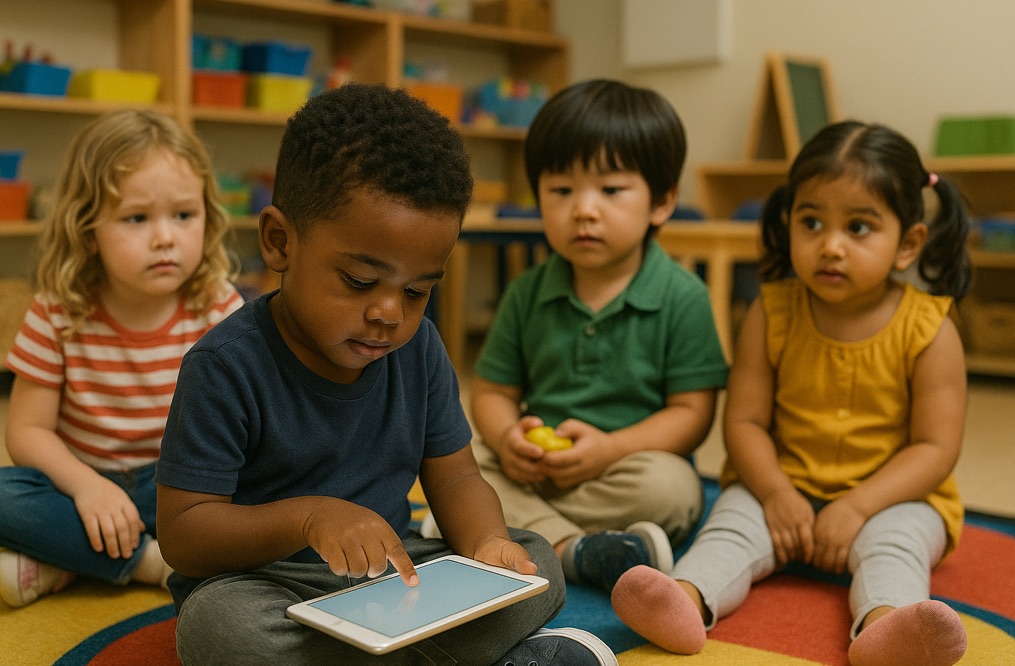
In today’s digital world, children are growing up surrounded by screens. From animated songs on YouTube to games on tablets and even glimpses of social media through older siblings or caregivers, digital content is woven into the fabric of early childhood. While technology offers unique educational opportunities, the influence of social media on young minds aged 0–8 is both profound and potentially problematic.
Let’s explore the implications of social media on early childhood development and education, and how parents and educators can respond thoughtfully.

🧠 Cognitive Development: A Double-Edged Sword
Social media can provide children with access to educational content, from numbers and letters to fun interactive stories. However, not all screen time is created equal.
✅ Benefits:
Educational videos and apps can boost early literacy and numeracy.
Interactive tools encourage problem-solving and memory skills.
⚠️ Risks:
Fast-paced media may reduce attention span and hinder focus.
Passive consumption can delay language development if it replaces real conversations.
Overstimulation may affect creativity and deep thinking.

💬 Social and Emotional Development
Children learn by observing and interacting. While media can model emotions or social behaviors, too much screen time can limit meaningful interpersonal experiences.
✅ Benefits:
Age-appropriate content can teach kindness, empathy, and emotion recognition.
Video calls help maintain bonds with distant family members.
⚠️ Risks:
Screen overuse may replace peer play, affecting social skill development.
Inappropriate content can spark anxiety, fear, or aggression.
Exposure to image-based platforms may plant early seeds of self-esteem issues

🎓 Educational Impact
When used intentionally, social media can enrich learning. But without careful curation, it may distract or mislead.
✅ Benefits:
Diverse content and online learning tools can supplement school activities.
Parent communities on social media share helpful ideas and support.
⚠️ Risks:
Passive learning doesn’t support active cognitive engagement.
Screen time can displace hands-on play, reading, and outdoor activity.
Misinformation online may shape unrealistic expectations or poor parenting advice.

🚸 Behavior and Habit Formation
Children quickly form habits. How we introduce technology matters.
⚠️ Concerns:
Excessive exposure may foster screen dependency.
Children imitate behavior—exposure to sarcasm, aggression, or poor digital etiquette can impact their social learning.
🔒 Privacy and Safety
Even seemingly harmless digital experiences come with safety concerns.
Young children may appear in shared photos or videos without understanding consent.
Ad-driven platforms may expose them to commercial content or in-app purchases.
🛠️ The Solution: Mindful Media Use
Social media isn’t inherently bad—it’s all about how it’s used, supervised, and balanced with offline activities.
💡 Key Takeaways:
Be selective: Choose high-quality, ad-free, age-appropriate content.
Co-watch and discuss what your child sees.
Encourage offline learning: play, talk, read, and explore the world.
Set time limits and model good screen habits yourself.


4 responses to “The Impact of Social Media on Early Childhood Development and Education”
This is such an important post and you laid out good guidlines. 🙌
LikeLiked by 3 people
Thank you for your support!
Glad you found it insightful 🌸
LikeLiked by 1 person
Impressive
LikeLiked by 3 people
Thank you! 🌸
LikeLiked by 1 person