
The Powerful Values Behind It
Every year, millions of Muslims around the world gather with family, friends, and their communities to celebrate Eid al-Adha—a festival rich in meaning, tradition, and spiritual depth.
But what exactly is Eid al-Adha, and why is it so important to Muslims?
Let’s explore the story behind this sacred occasion and the timeless values it teaches us all—regardless of faith.
📖 The Story Behind Eid al-Adha
Eid al-Adha, also known as the Festival of Sacrifice, commemorates a powerful moment in Islamic history.
According to Islamic tradition, Prophet Ibrahim (Abraham) was commanded by God in a dream to sacrifice his beloved son, Ismail (Ishmael). Although it was a heartbreaking command, Ibrahim showed complete faith and obedience, trusting in God’s wisdom.
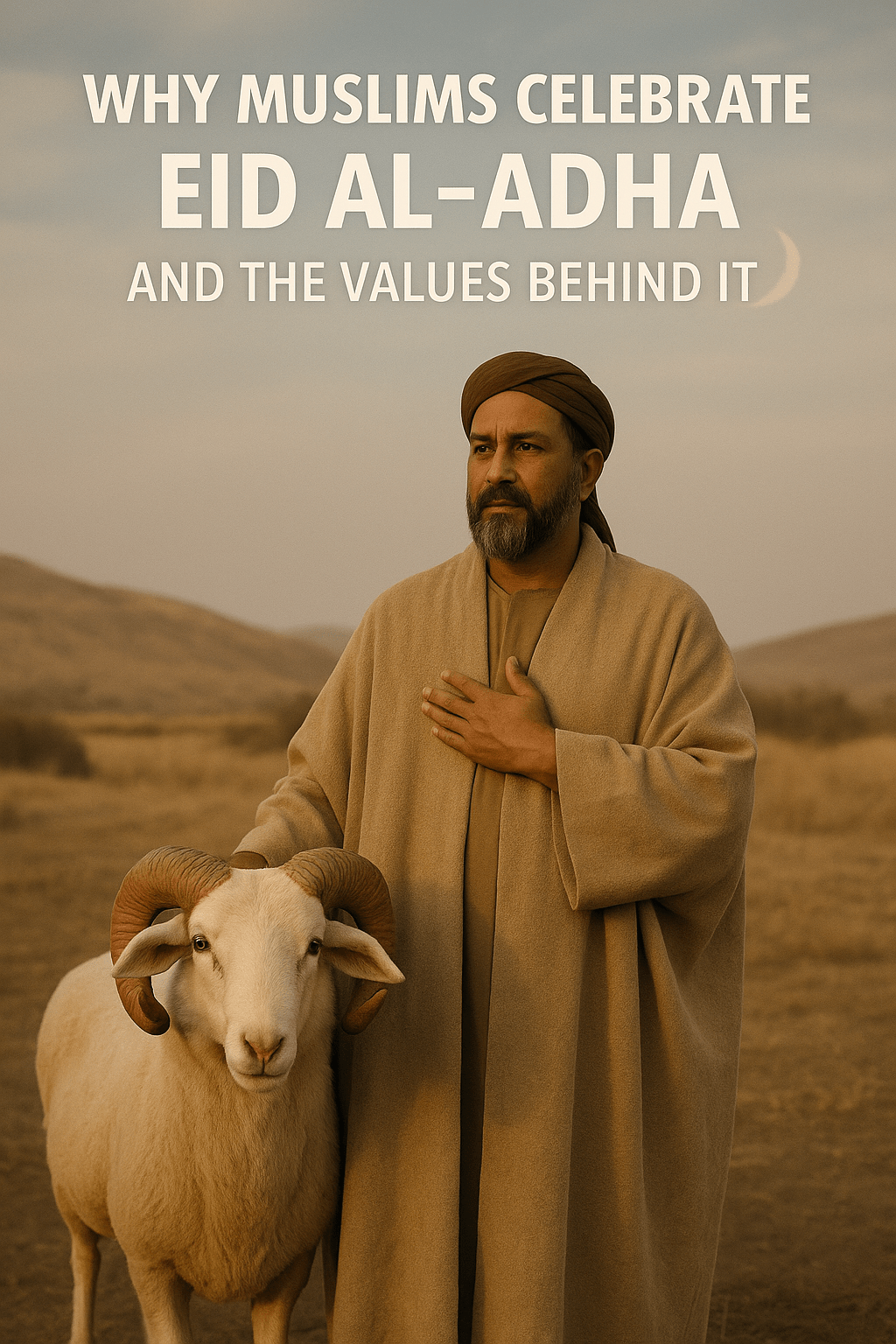
Just as he was about to carry out the sacrifice, God intervened—replacing Ismail with a ram. This was a divine test of Ibrahim’s devotion, and he passed it with unwavering trust and submission.
To this day, Muslims honor this moment during Eid al-Adha, remembering the strength of faith and the willingness to put God’s will above their own desires.

🌟 The Deeper Values of Eid al-Adha
Eid al-Adha is more than a holiday—it’s a powerful reminder of core values that inspire compassion, humility, and service. Here’s what it truly represents:
1. Faith and Surrender
The story of Ibrahim teaches the importance of placing trust in something greater than ourselves. It’s about surrendering the ego, embracing humility, and believing that even life’s toughest trials carry purpose.
2. Sacrifice and Selflessness
The act of sacrificing an animal is symbolic. It reminds Muslims to let go of personal attachments and ego-driven desires—to “sacrifice” selfishness, pride, or comfort in service of something higher.
3. Charity and Sharing
A key part of Eid al-Adha is giving. Muslims who perform the sacrifice divide the meat into three parts:
• One-third for their family,
• One-third for relatives and friends,
• One-third for those in need.
This practice strengthens community bonds and ensures that everyone—especially the poor—shares in the joy.
4. Unity and Equality
On Eid morning, Muslims gather in large congregations for special prayers. All stand shoulder to shoulder—regardless of wealth, status, or background—highlighting the deep equality and unity within the faith.
5. Reflection and Gratitude
Eid al-Adha coincides with the Hajj pilgrimage in Mecca, one of the five pillars of Islam. It’s a time to reflect on life’s blessings, renew one’s purpose, and show deep gratitude to God.
🕌 How Muslims Celebrate

Eid al-Adha is marked by both spiritual acts and festive traditions:
• Special prayers at the mosque or in open fields
• Animal sacrifice (for those who can afford it), often a goat, sheep, or cow
• Charitable giving and food distribution to the less fortunate
• Visiting family and friends
• Wearing clean or new clothes to mark the occasion
• Exchanging greetings like “Eid Mubarak!” meaning “Blessed Eid”
💫 A Message for All
Even if you’re not Muslim, the message of Eid al-Adha can resonate:
• Stand firm in your values.
• Trust in a higher purpose.
• Be generous.
• Build community.
• Live with humility.
In a world often divided, these values—faith, compassion, and shared humanity—are worth celebrating by all.
Eid Mubarak to all who celebrate! May this season bring peace, purpose, and connection to your life.


3 responses to “🌙 Why Muslims Celebrate Eid al-Adha”
The Muslims own Christmas in Nigeria . Everyone celebrates it together, dining and wining . Lots to eat and drink . The children all happy especially with the slaughtering of rams, cooking and sharing . . .
LikeLiked by 1 person
I’m glad to see the acceptance and tolerance! That is proof of peace and respect. 🌸
LikeLiked by 1 person
Cosmic clarity
LikeLiked by 1 person