

Chaos is not merely the absence of order. It’s a crucible—an environment where the old breaks down and something new, unpredictable, and often revolutionary is born.
While we typically associate chaos with crisis—natural disasters, political unrest, personal upheaval—its impact on our lives, communities, and broader society is both destructive and transformative. Whether it’s a pandemic that forces us to rethink how we work, or a protest movement that shatters societal norms, chaos has a curious way of shaping us more than calm ever could.

1. Chaos as a Catalyst for Change
In our personal lives, chaos often arrives uninvited: the sudden loss of a job, the end of a relationship, an illness. These moments shatter our routines and force us to confront uncomfortable truths. But within this discomfort lies power. People often report that the most meaningful transformations in their lives stemmed from periods of intense disruption.
This phenomenon extends beyond the individual. Entire communities can be galvanized by shared chaos. Consider how natural disasters, though devastating, often foster an incredible spirit of cooperation. In the face of destruction, barriers fall. Strangers become neighbors. Priorities shift from individual to collective survival.
2. Chaos Disrupts—But Also Exposes
Societally, chaos reveals the cracks. It exposes inefficiencies, inequalities, and fragilities we’ve long ignored. The COVID-19 pandemic didn’t just disrupt our routines; it laid bare the deep disparities in healthcare, education, and employment. Protests against racial injustice showed us how chaos can expose the moral blind spots of an entire system.
When chaos pulls the curtain back, it forces us to confront what we’ve long been willing to overlook. This is not merely destruction; it’s diagnosis.
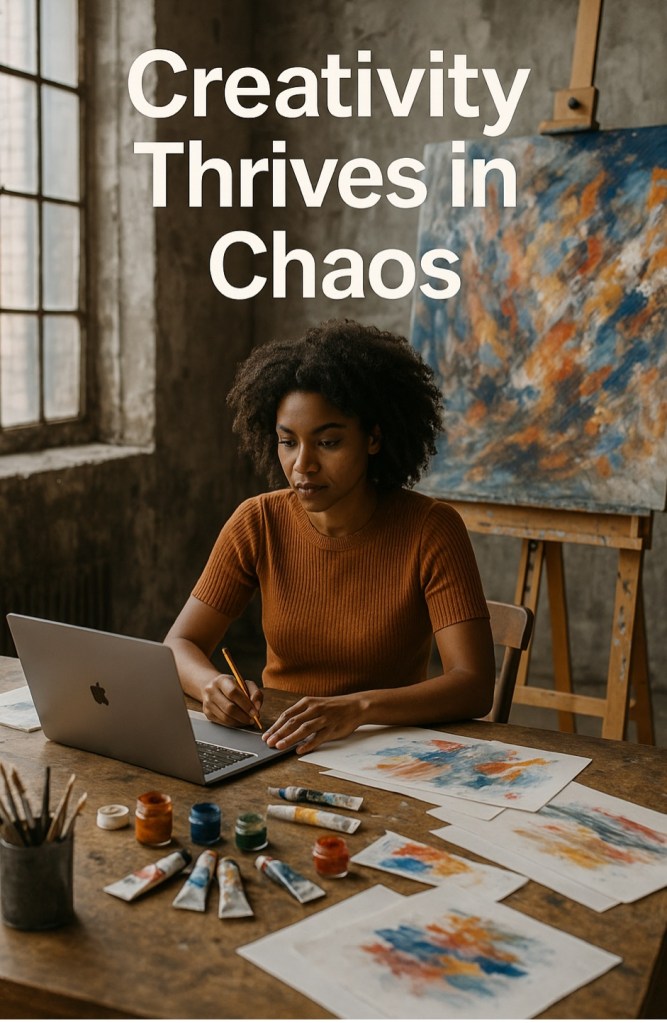
3. Creativity Thrives in Chaos
Many of history’s greatest innovations and cultural movements have emerged from periods of chaos. The Renaissance followed the Black Death. The Civil Rights Movement followed decades of social turmoil. Startups are born from industry shakeups. Creativity doesn’t just survive chaos—it drinks from its well.
Why? Because chaos breaks the mold. It opens the door for new ideas, new voices, new ways of thinking. When the status quo collapses, space is made for something entirely different to take root.
4. Community Re-Imagined
In chaos, we see the potential for community redefinition. Social cohesion isn’t forged by comfort—it’s tested and tempered in struggle. When Hurricane Katrina hit New Orleans, official systems failed. But grassroots mutual aid networks emerged in the wreckage, showing that communities can self-organize in profoundly effective ways.
In digital spaces too, chaos has a strange way of uniting people. Online forums that emerge in times of crisis often evolve into lasting communities, bound not just by shared interest, but shared resilience.
5. From Surviving to Thriving: How to Harness Chaos
So how do we move from merely enduring chaos to harnessing it?
Embrace impermanence: The only constant is change. Accepting this prepares us emotionally and intellectually for the next storm.
Build antifragility: As Nassim Taleb suggests, systems should not just survive shocks—they should grow stronger because of them. Individuals and societies alike can build “antifragility” through flexibility, diversity, and decentralization.
Invest in community: Strong social bonds act as shock absorbers. The deeper our connections, the more resilient we become.
Channel chaos into creativity: When nothing is certain, everything is possible. This is the perfect soil for invention and reinvention.

The Gift Hidden in the Mess
Chaos is messy, terrifying, and often painful. But it is also deeply human. It reminds us that life is not a linear path, but a swirling, unpredictable current. And if we’re brave enough to ride it rather than resist it, we might just find that chaos doesn’t destroy who we are—it reveals it.
In the end, the measure of a society—or a person—is not how well it avoids chaos, but how courageously it grows from it.
Have you experienced a moment when chaos changed your life for the better? Share your story in the comments—because your storm might be someone else’s lighthouse.


9 responses to “Embracing the Storm The Unseen Impact of Chaos on Our Lives, Communities, and Society”
Authentic perspective
LikeLiked by 2 people
Thank you for your support!
🌸
LikeLiked by 1 person
Excelente 💯
LikeLiked by 2 people
Thank you 😊
LikeLiked by 2 people
I hope visit my blog and grow towether 🌹 thanks
LikeLiked by 2 people
Thank you and sure! 🌸
LikeLiked by 2 people
Your blog is beautiful and easy to navigate.
LikeLiked by 1 person
Thank you Mary!
It’s means the world having your support 😊🌸🌷
LikeLiked by 1 person
Pure delight
LikeLiked by 2 people