

The Evolution of Work
Our concept of work has transformed dramatically—from the age-old barter systems and in-person trading to today’s digital gig economy. As technology reshapes our world, understanding the evolution of labor not only helps us appreciate our past but also guides us in navigating our future. In this post, we compare the traditional trading methods of early societies with the modern landscape of freelance work and gig jobs.
The Traditional Trading Landscape
A Community-Driven Economy
Early trading was all about community interaction. In those days, trade was not just a means to exchange goods but also an opportunity to build relationships and establish trust. Communities depended on one another for survival:
• Nature of Work: Trade was predominantly manual and based on tangible goods like livestock, produce, or handcrafted items.
• Work Environment: Transactions happened face-to-face within local markets or community gatherings.
• Payment Methods: Initially, barter was the norm. Later, as societies evolved, coin-based transactions and negotiable goods began to replace the barter system.
This system was deeply embedded in the physical and social fabrics of early communities, where local skills and craftsmanship were highly valued.

Our concept of work has transformed dramatically—from the age-old barter systems and in-person trading to today’s digital gig economy. As technology reshapes our world, understanding the evolution of labor not only helps us appreciate our past but also guides us in navigating our future. In this post, we compare the traditional trading methods of early societies with the modern landscape of freelance work and gig jobs.
The Traditional Trading Landscape
A Community-Driven Economy
Early trading was all about community interaction. In those days, trade was not just a means to exchange goods but also an opportunity to build relationships and establish trust. Communities depended on one another for survival:
• Nature of Work: Trade was predominantly manual and based on tangible goods like livestock, produce, or handcrafted items.
• Work Environment: Transactions happened face-to-face within local markets or community gatherings.
• Payment Methods: Initially, barter was the norm. Later, as societies evolved, coin-based transactions and negotiable goods began to replace the barter system.
This system was deeply embedded in the physical and social fabrics of early communities, where local skills and craftsmanship were highly valued.
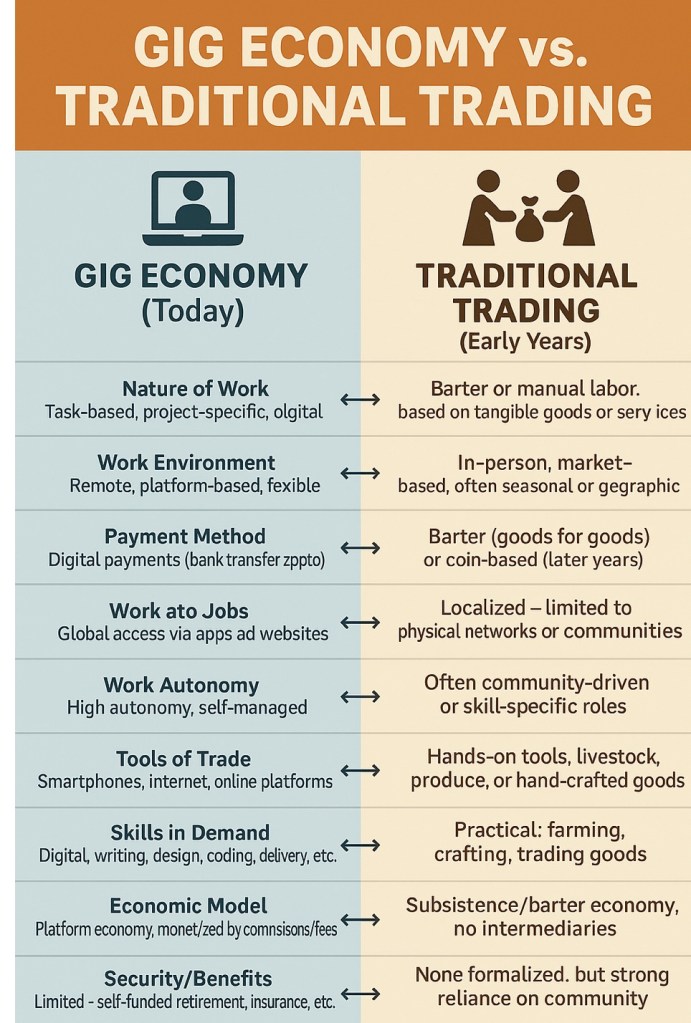
This comparison not only underscores a shift in tools and methods but also reflects broader societal changes—from communal dependency to an emphasis on individual entrepreneurship.

The Impact of Technological Advancements
The digital revolution is a central driver behind the gig economy:
• Remote Work: The normalization of working from home or on the go means a broader, more inclusive access to job opportunities.
• Platform Economy: By leveraging technology, companies like Upwork, Fiverr, and Uber make it easier for gig workers to connect with clients worldwide.
• Future Trends: Innovations in AI and automation are poised to further reshape freelance roles, creating new opportunities while potentially rendering some tasks obsolete.
While early trading systems were limited to what local communities could offer, today’s digital platforms open up a global network of service exchanges. This access not only increases earning potential but also intensifies competition among a diverse workforce.
Reflecting on the Evolution of Work
Both systems have their own unique strengths and challenges. Early trading was deeply embedded in trust and communal interaction, while the gig economy champions flexibility, scalability, and technological efficiency. However, with the benefits of autonomy and access in the modern system come challenges such as financial instability, irregular income, and the pressure of self-managed benefits.
To bridge the gap between these models, there’s growing dialogue around how to protect workers in the gig economy and how to build more sustainable, equitable digital platforms. As we move forward, policymakers and businesses are under increasing pressure to balance innovation with workers’ rights—a challenge that echoes the evolving nature of trade through history.
Conclusion
From the collaborative trading floors of early societies to the dynamic, tech-driven platforms of today, the evolution of work tells a story of adaptation, innovation, and resilience. Understanding this progression helps us appreciate where we come from and inspires us to shape a future where technology and humanity can coexist in a more balanced economic landscape.
Whether you’re a freelancer navigating the gig economy or a traditional trader fascinated by historical methods, this comparison invites reflection on how work adapts to societal shifts—and how the seeds of the past continue to influence our modern economic fabric.


4 responses to “From Bartering to Bytes”
Great post
LikeLiked by 2 people
Thank you so much 😊
LikeLiked by 2 people
Nice ❤️
LikeLiked by 4 people
Thank you 😊
LikeLiked by 3 people